Organization
·
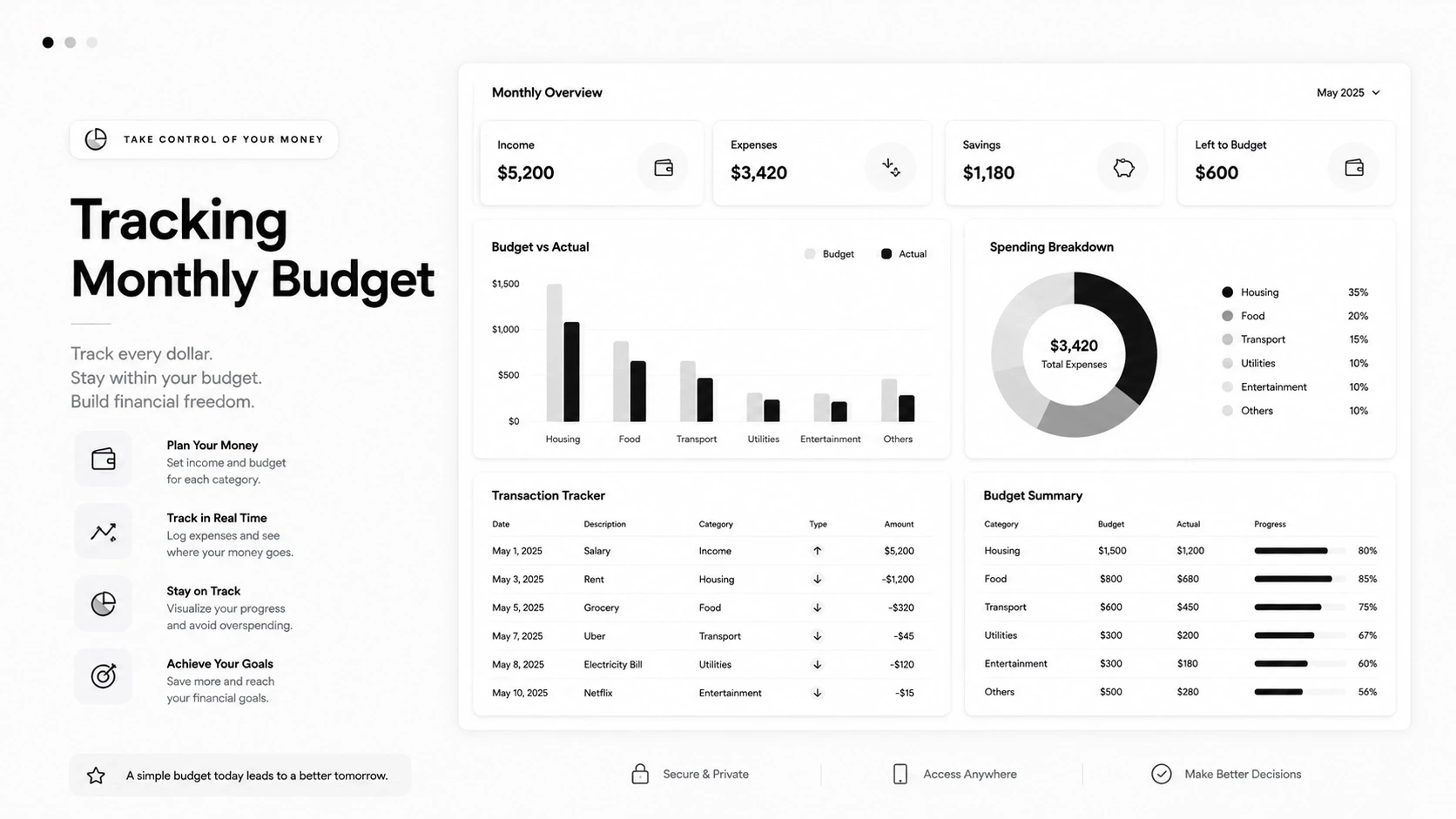
Tracking your budget is not about restricting yourself. It is about removing guesswork. Most people are not overspending everywhere — they are overspending in one or two places they have never actually looked at. Fifteen minutes of tracking usually finds it.
What tracking actually changes
A budget you write once and never revisit is a wish. A budget you track is a feedback loop, and feedback is what changes behaviour. Once the numbers are visible, four things tend to happen:
Invisible spending becomes visible. Subscriptions, delivery fees and “small” purchases only look small one at a time.
Decisions get faster. When you know what is left for the month, a purchase is a yes or a no instead of a low-level worry.
Saving stops depending on willpower. You can only automate what you have measured.
Money stops being a source of dread. Uncertainty is what makes finances stressful, not the balance itself.
The three numbers that matter
You do not need forty categories. You need three numbers, updated honestly.
1. What comes in
Your actual take-home amount, after tax and deductions — not the headline salary. If your income varies, use the average of your last three months and treat anything above it as a bonus, not a baseline.
2. What is already committed
Rent or mortgage, bills, loan payments, insurance, subscriptions. These are decisions you made in the past and are still paying for. This is also the category where a single review saves the most money.
3. What is genuinely left
Income minus commitments, split between saving and spending before the month starts. That number is your real budget. Everything else is arithmetic.
How to start in 15 minutes
Open the last 30 days of transactions. One account or card is enough to begin.
Sort them into five buckets. Housing, food, transport, subscriptions, everything else. Five is plenty.
Total each bucket. Do not judge the numbers yet — just get them on the page.
Circle the surprise. There is almost always one bucket bigger than you expected. That is your first target.
Set one limit, not five. Pick the surprise category and give it a number for next month.
Our Finance OS template does this in Notion — income, expenses, budgets and net worth in one place, so the monthly review takes minutes instead of an evening.
What to do at the end of each month
Give it ten minutes. Compare what you planned with what happened, and ask two questions: which category went over, and was it worth it? Some overspending is a values decision, not a mistake. The point of tracking is to tell the two apart.
Then adjust one thing. A budget you edit every month is working. A budget you have never edited is being ignored.
Common questions
How often should I check my budget?
Once a week for five minutes, plus a longer review at month end. Daily checking tends to create anxiety without improving decisions.
Do I have to track every coffee?
No. Category totals are enough for most people. Track individual purchases only in the one category you are actively trying to change.
What if my income is irregular?
Budget against your lowest recent month, not your best one. In stronger months, move the difference straight into savings before it becomes normal spending.
Spreadsheet, app or Notion?
Whichever one you will actually open. Notion works well if you already live there, because the budget sits next to your notes and plans instead of in another app you forget to check.
The spreadsheet is not the point
Tracking your budget matters because it turns money from a vague worry into a set of decisions you can see and change. Start with last month’s transactions, five categories and one limit. That is a real budget, and it takes an afternoon at most.